


By Jayden Parker
Hi all,
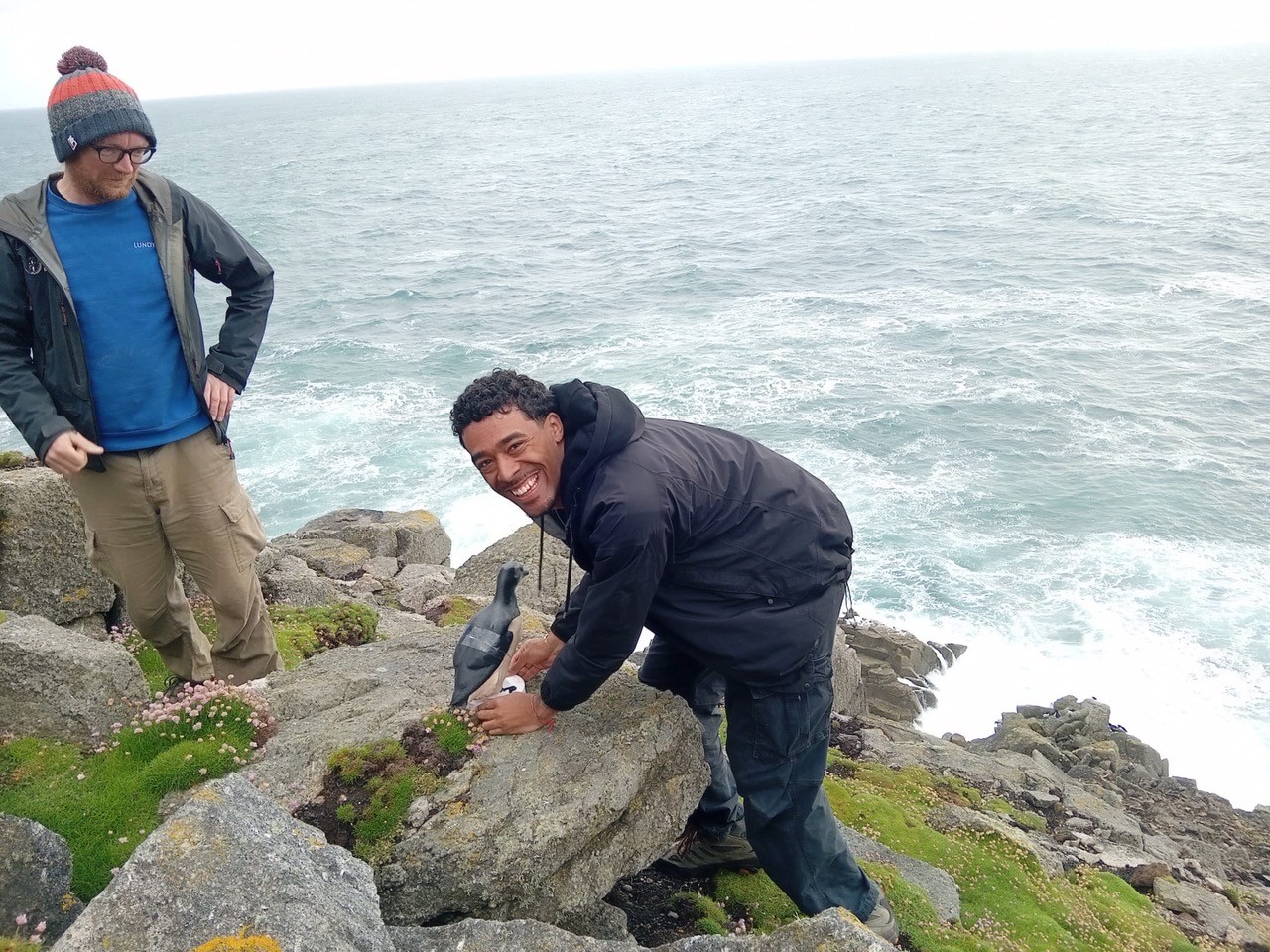 Me Setting up my first Guillemot model! By Thomas Weston
My name is Jayden Parker, and I’m a master’s student from the Royal Veterinary College lucky enough to be doing a research project on Lundy! From the day I started this degree, the question of my thesis was always lurking in the back of my mind. Would I be able to find a supervisor with shared interests? Would we ever come up with an interesting question? Would fieldwork even be a possibility? Thankfully, the answer to all three questions - in my opinion - was yes.
Growing up in Bermuda, I began my conservation journey with the Bermuda Aquarium, Museum and Zoo at 14 years old. There, I had the pleasure of working with plenty of seabirds - namely the iconic White-tailed tropicbirds and rarely the endangered Bermuda petrel. I have also been lucky enough to do rehabilitation and conservation work in Borneo and the Galápagos Islands over the years! Given my interest in similar species, I thought I would seek out a project in a similar vein. My supervisor was quick to recommend Lundy Island. Due to his love for climbing, he had visited Lundy once before to traverse the most inhospitable cliffs the island had to offer. As such, he knew the island was home to an incredible array of seabirds - and thus began my path here!
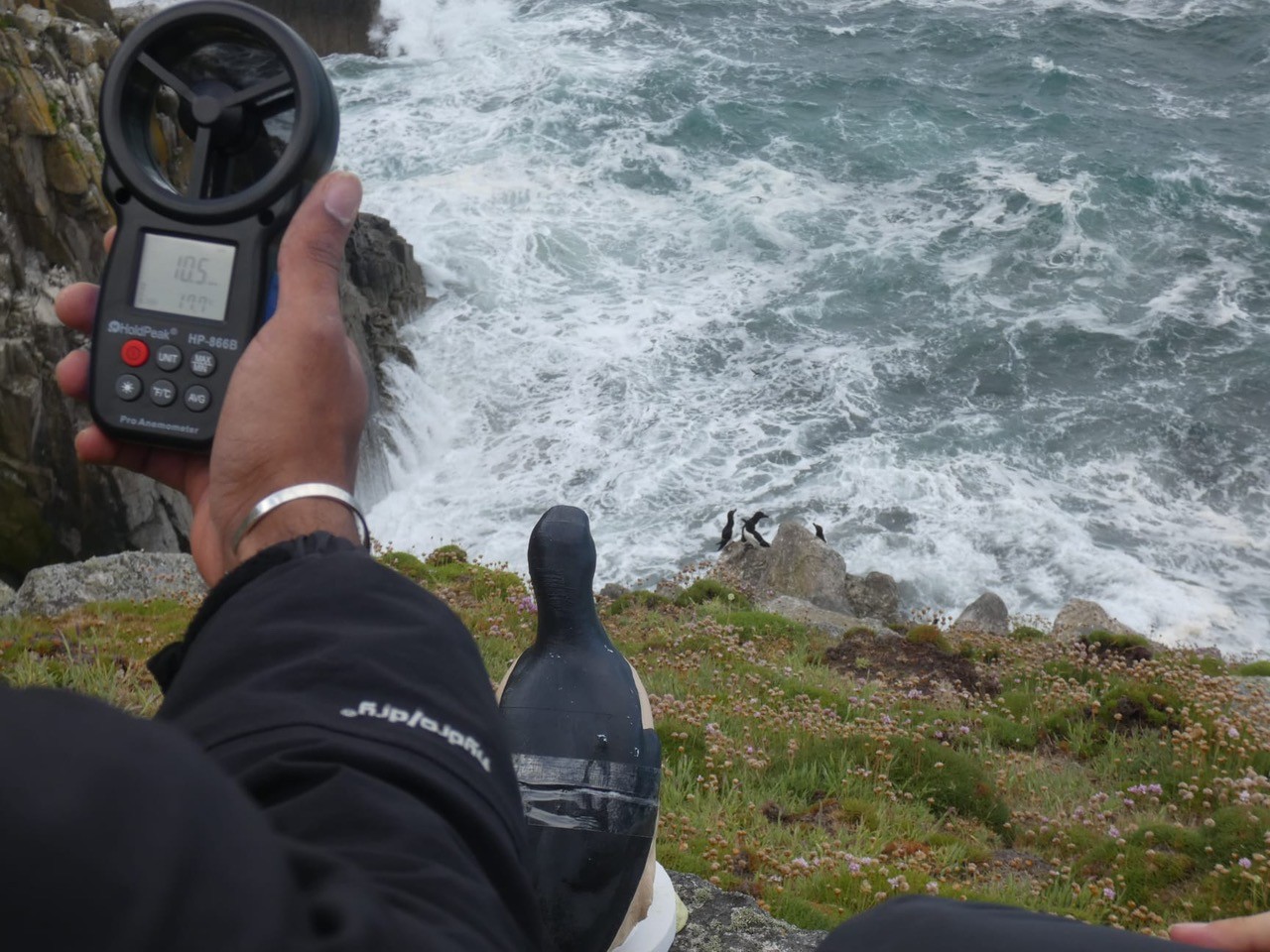 At each site, alongside temperature, testing the wind speed is essential! Pic by Thomas
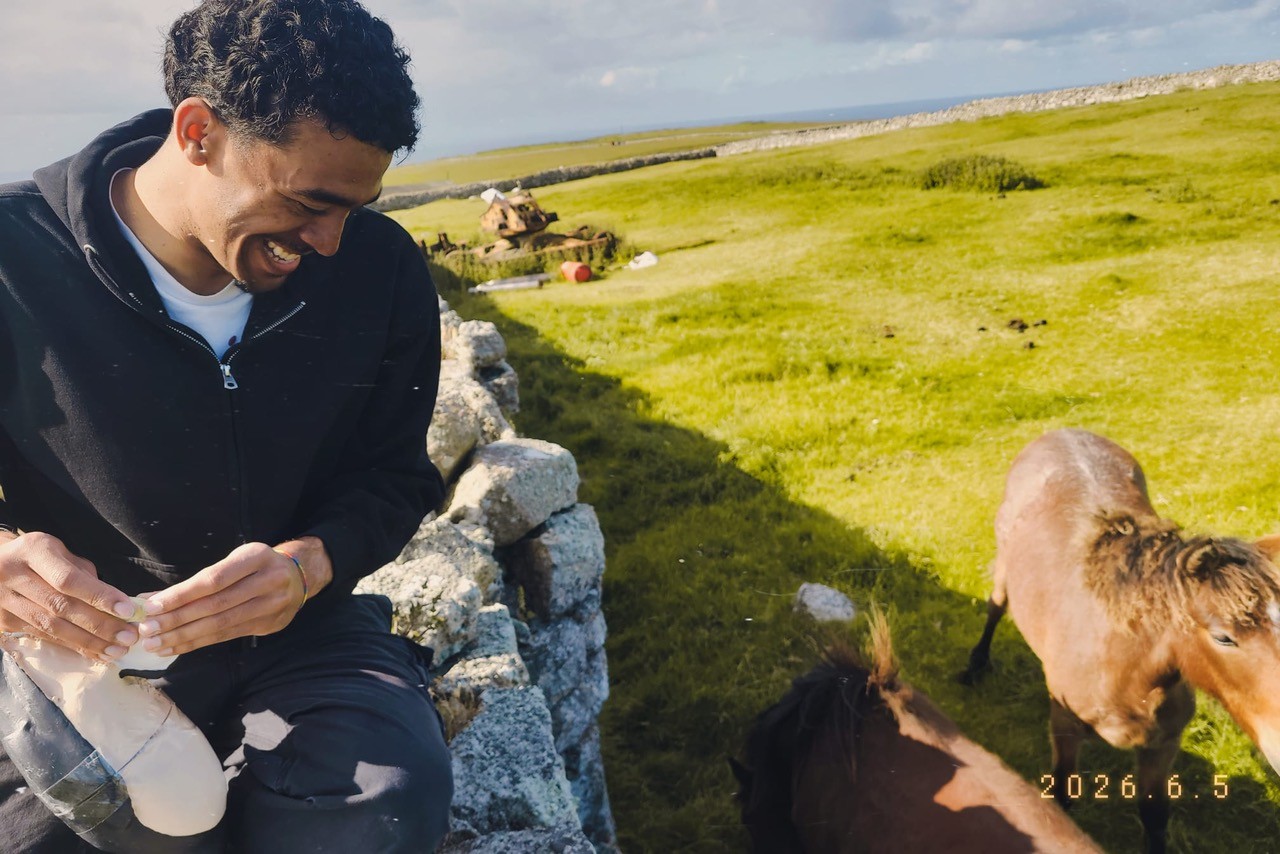 With a 'control' Guillemot set up everyday too!
Currently, I am working to investigate how Lundy’s seabirds are affected by the heat. Typical ambient air temperature measurements rarely tell the full picture. On granite cliff ledges, fully exposed to the hot sun, temperatures can significantly diverge from what the air temperature would suggest. This more representative temperature on the ground is known as the true ‘operative temperature’ experienced by these cliff-nesting seabirds. I am curious to find out how much these operative temperatures vary from standard air temperature measurements, and if slightly different cliff microhabitats play a role in the heat levels!
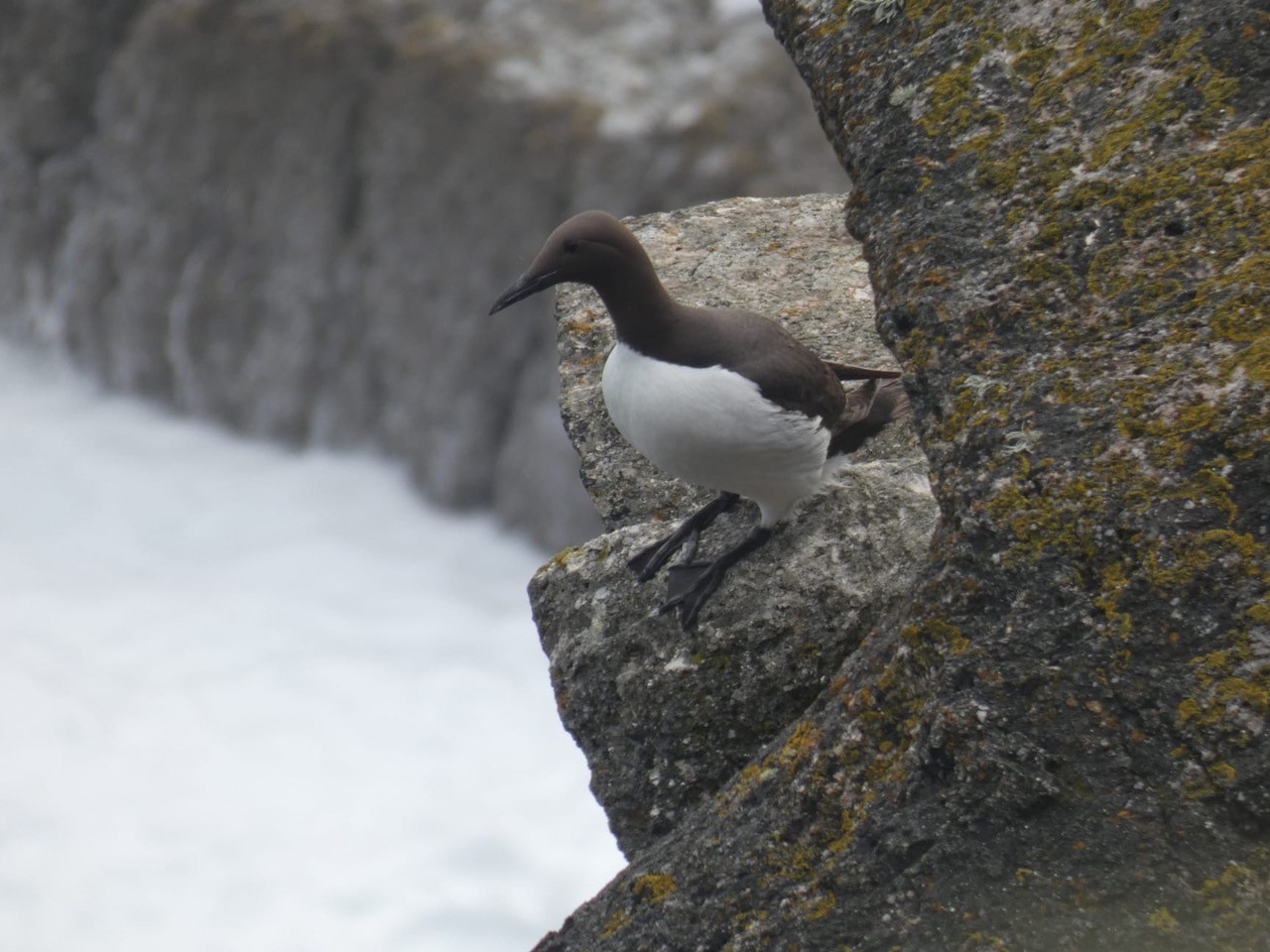 A Common Guillemot by Thomas
To do so, I have come to the island with four 3D-printed guillemot models. They are made from very specific materials and coated with very specific paint, all of which have been found to closely recreate the heat absorption levels of a Common Guillemot! Inside, I have a very hardy thermometer, and as of today, I have placed my first models along Lundy’s granite cliffs (see the pics above!). I plan to rotate them between different sites daily to get a better idea of exactly what temperatures these incredible seabirds are exposed to. As the climate continues to warm, research into the effects of heat on avian welfare and breeding success grows increasingly valuable. My work may also help validate the use of 3D-printed models for ecological thermal studies, and potentially to predict which areas might be most vulnerable to heat on warmer days.
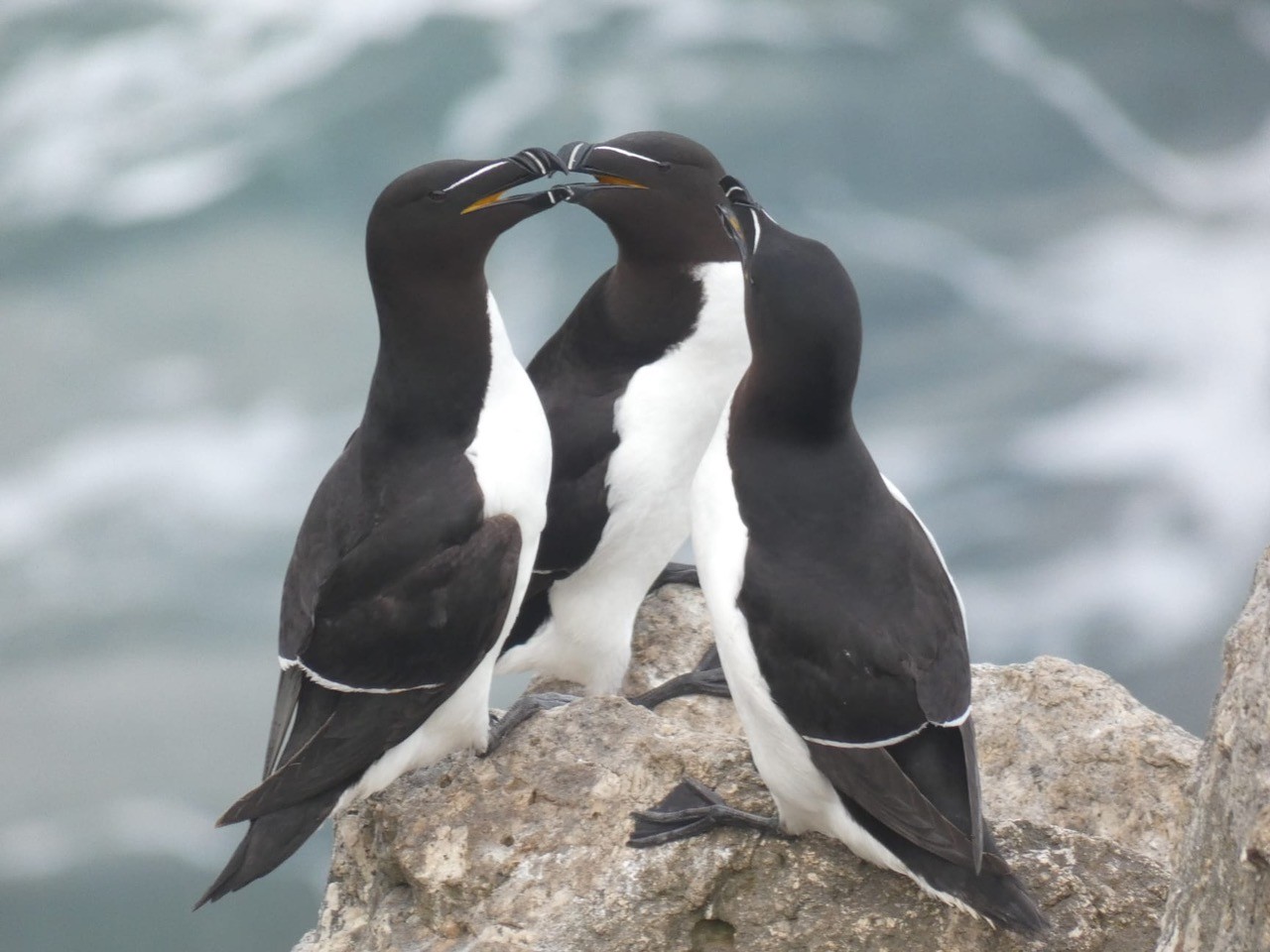 Some of the nosy neighbours who are also affected by temperature - the Razorbill. Pic by Thomas Weston
Outside of my research, I have been able to immerse myself in plenty of the activities that Lundy has to offer! I have spent a good amount of time trekking around the island, observing its incredible array of songbirds and seabirds (including Guillemots, Razorbills, Fulmars, Gannets, Shags, and, of course, Puffins), alongside the Sika deer, Soay sheep, and the ever wonderful Highland cows. It is quite like something out of a fairy tale! I even went for a swim in water far colder than I have ever dared touch before (in Bermuda, we rarely swim unless the water temperature is above 26 degrees).
Additionally, I have also been able to tag along with the volunteers during their duties. Some standout moments include helping with morphometrics on House sparrows for the Sparrow Project, as well as catching Manx shearwaters on the steep slopes after midnight for ringing! It was absolutely amazing, and unlike anything I’ve done before.
Overall, I have had nothing short of an incredible time here, and I am greatly looking forward to the next few weeks of my study!