


Bird Sightings
28th September to 2nd October 2023
The 28th was a fine, sunny day, but strong winds have continued this week. They have mostly been southerly meaning that even Millcombe Valley, typically sheltered from the prevailing winds, was blustery with limited activity much of the time. The island was cloaked in a clingy mist for the entirety of 1st October. Come the 2nd, the mist lifted, revealing an eerily still morning where finally ringing in Millcombe could resume before the mist returned late afternoon.
60 Blackcaps, 20 Goldcrests and a rather late Pied Flycatcher were all ringed on the 2nd. The flycatcher was scored low on fat and muscle, which is perhaps telling of it's late arrival. Conditions here are still very mild with a lot of insects still very active so there should be plenty of food to allow this bird to feed up and improve it's condition for the onwards journey.
Throughout this week two Water Rail continue to call in Millcombe and a Grey Heron is seen daily moving between waterbodies. A Golden Plover was heard around the airfield on the 29th-30th. On the 29th a single Ringed Plover was on the ground at the north end, along with a Dunlin. Another Ringed Plover was heard flying over Millcombe on both the 29th and 30th.
Three Cormorants were seen out to sea on the 28th, and another three flew south over the airfield on the 29th - could these be the same individuals? Interestingly earlier in the month 12 Cormorants were seen flying south off of Rat Island, whilst four days later another 12 were picked up. It's difficult to know if these are again repeat sightings of this fairly scarce Lundy visitor, or just coincidences! A seawatch on the still morning of the 2nd produced quality if not quantity, with two Arctic Skua heading north as well as Great Northern Diver.
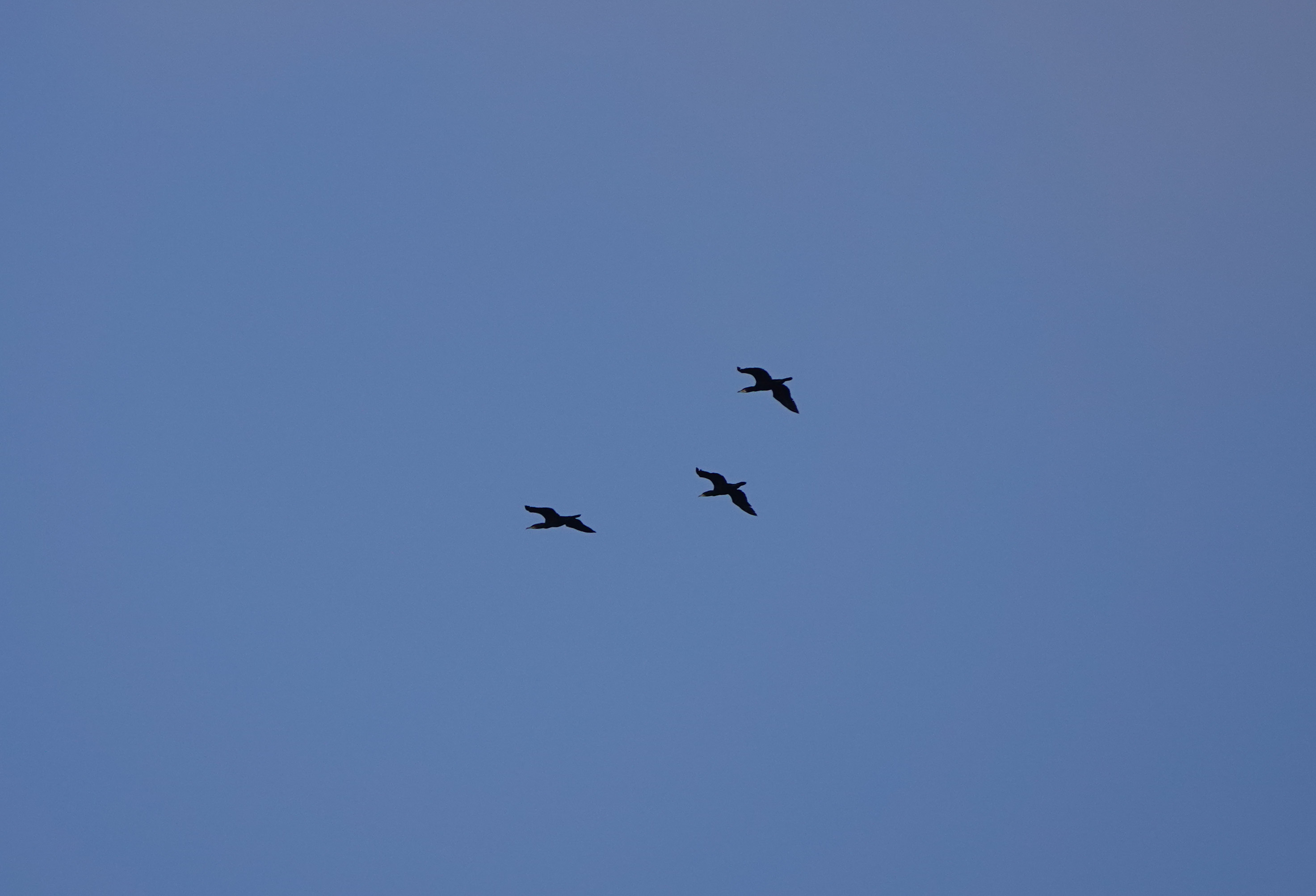 Three Cormorant heading south, seen from the Airfield. © Angus Croudace
A high count of 40 Rock Pipit was recorded on the 28th, with a few around the village but most picked up on the west coast on the plateau above Brazen Ward. This could be a mixture of migrant birds dropping onto the plateau, or perhaps a more local movement of our local breeders seeking more shelter for the winter. We had high counts of 566 Meadow Pipit and 39 Skylark on the 29th in this period. An evening dazzling on the 29th caught 11 Skylark, along with one of the 21 Wheatear recorded on the same date.
Four buntings have been added to the Lundy year list in just over a week, with an Ortolan Bunting picked up on census near the Stonecrusher on 30th. Much alike the Little and Yellow-breasted Buntings from earlier in the week, despite concerted efforts it was not refound later in the day. Reed Bunting singles were recorded both in Millcombe and at Pondsbury on the 2nd.
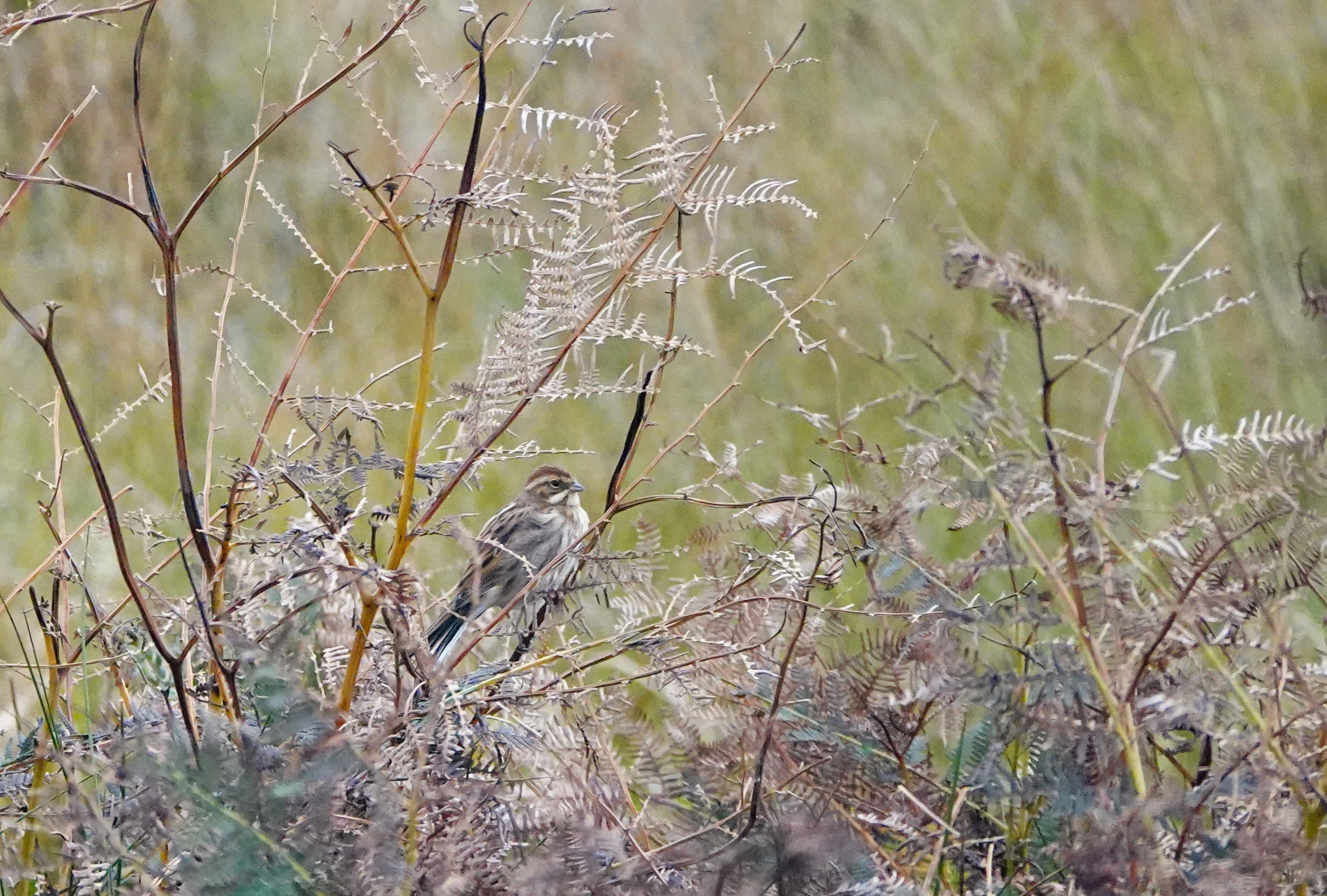 Reed Bunting, Pondsbury © Angus Croudace
The 29th saw another push of hirundines including 594 Swallow and 132 House Martin. Among them Chris Baillie picked up a juvenile American Cliff Swallow, a vagrant visitor that, if accepted, will be the first record of this species for Lundy. This record is part of a major influx to the Western Palaearctic this autumn after they were initially displaced by strong winds on the North American continent in late August.
We've had another two waves of Blackcaps this week after just seven being left on the 28th; 78 on the 30th and 100 on the 2nd. A second young Barred Warbler of the autumn was seen around the top of Millcombe on the 29th. Luke also managed to catch and ring our long-staying Whinchat, which never strays far from Barton's Fields. On the 2nd two Common Crossbills were observed coming into Millcombe and feeding in the pines for ten minutes before departing as quickly as they arrived.
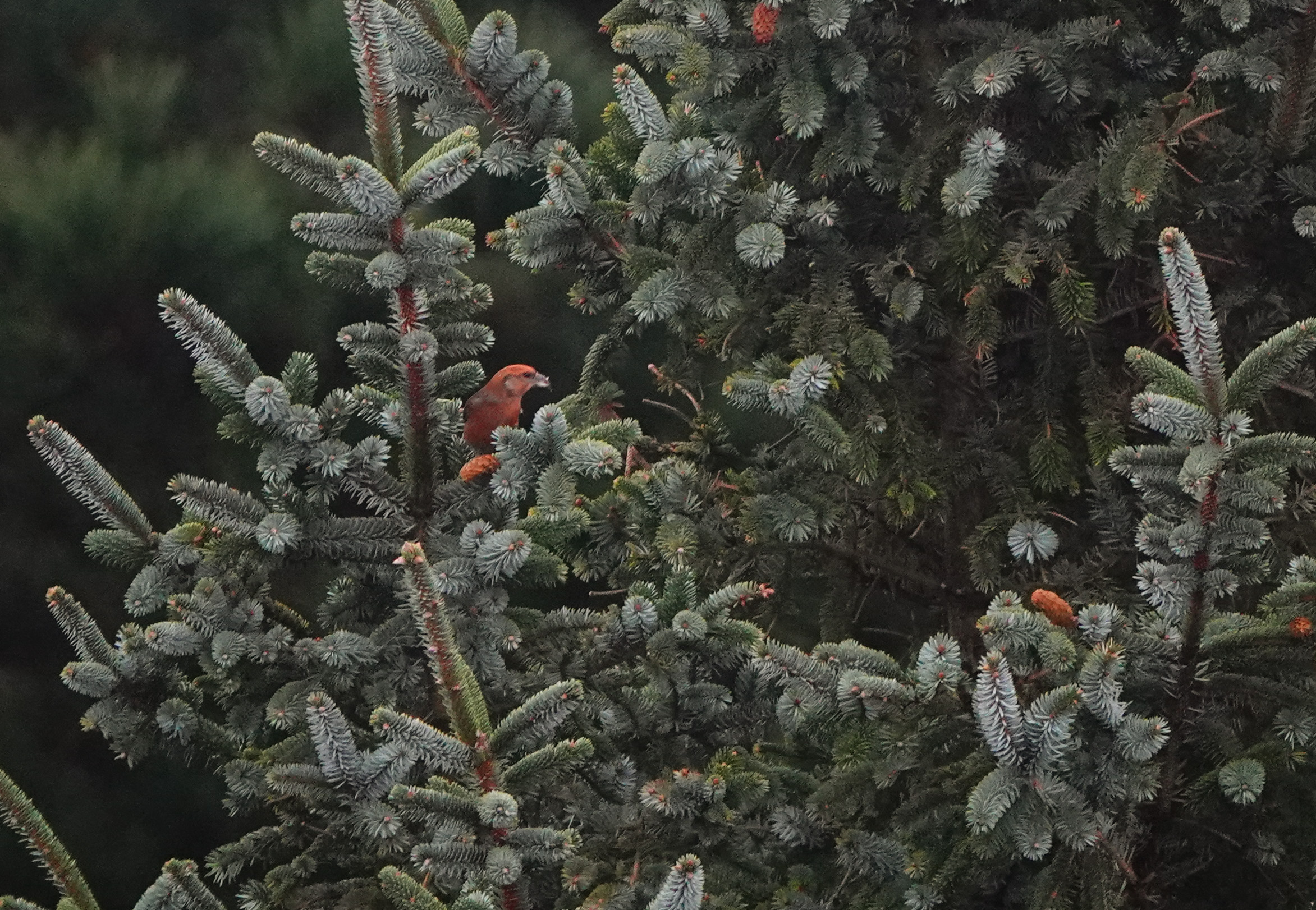 Common Crossbill, Millcombe Pines © Angus Croudace
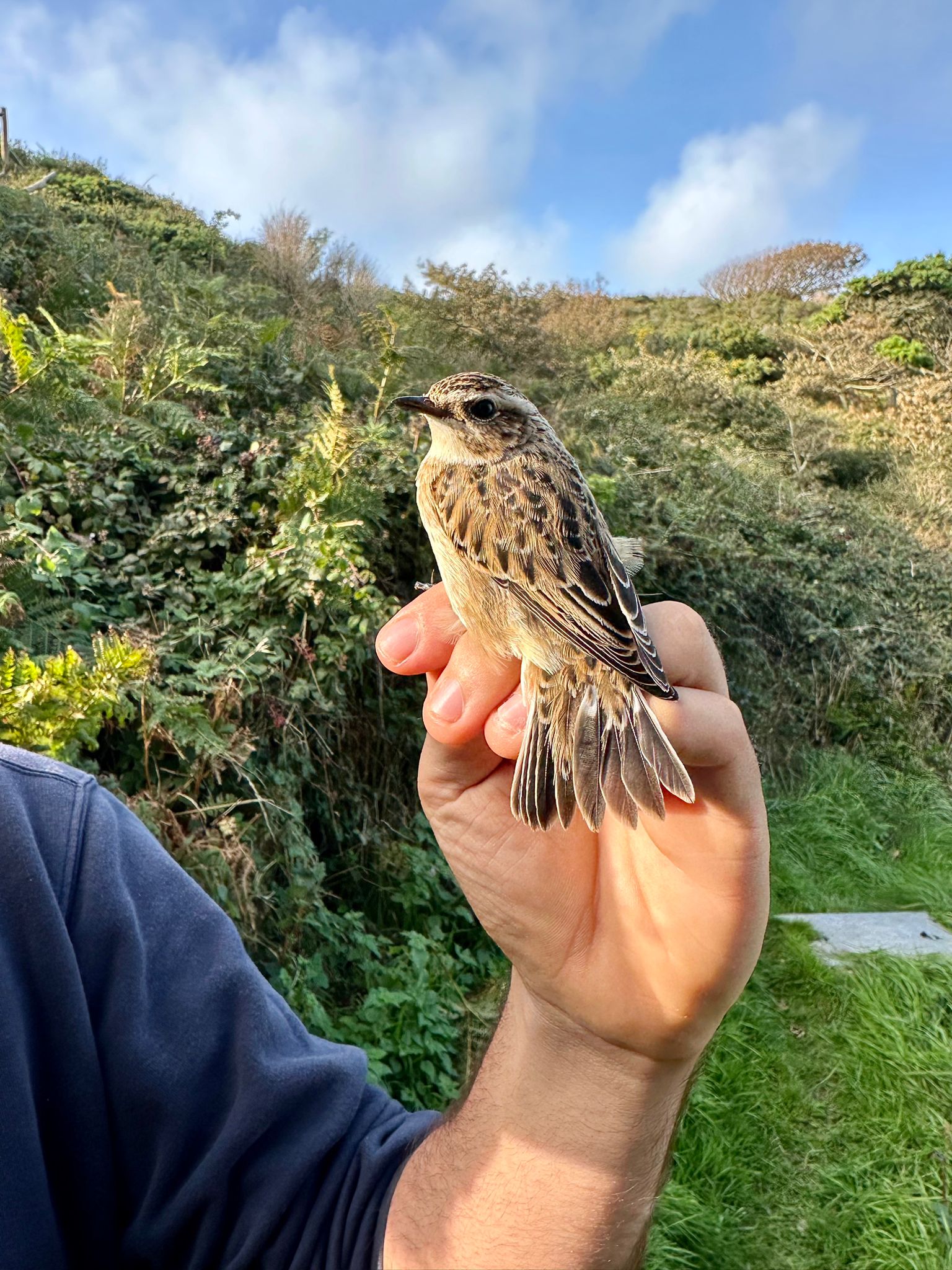 First winter female Whinchat © Nicola Dunkin
The first Lesser Whitethroat of Autumn was picked up in the willows on the Terrace on the 28th and refound at Quarter Wall on the 29th. A Sedge Warbler was present at Pondsbury on the 28th and a Reed Warbler on the 2nd. A couple of Spotted Flycatchers have been hanging on in Millcombe, with a high count of three on the 29th. Two Tree Pipit were seen on the 29th, one on the ground in SW field, and the other calling around Millcombe. On the 30th six Siskin were bombing around Millcombe first thing, with another two singles picked up later in the day. Another single Song Thrush was seen in Millcombe on the 29th and a Firecrest was in Smelly Gully on the 1st, the first since the 22nd.
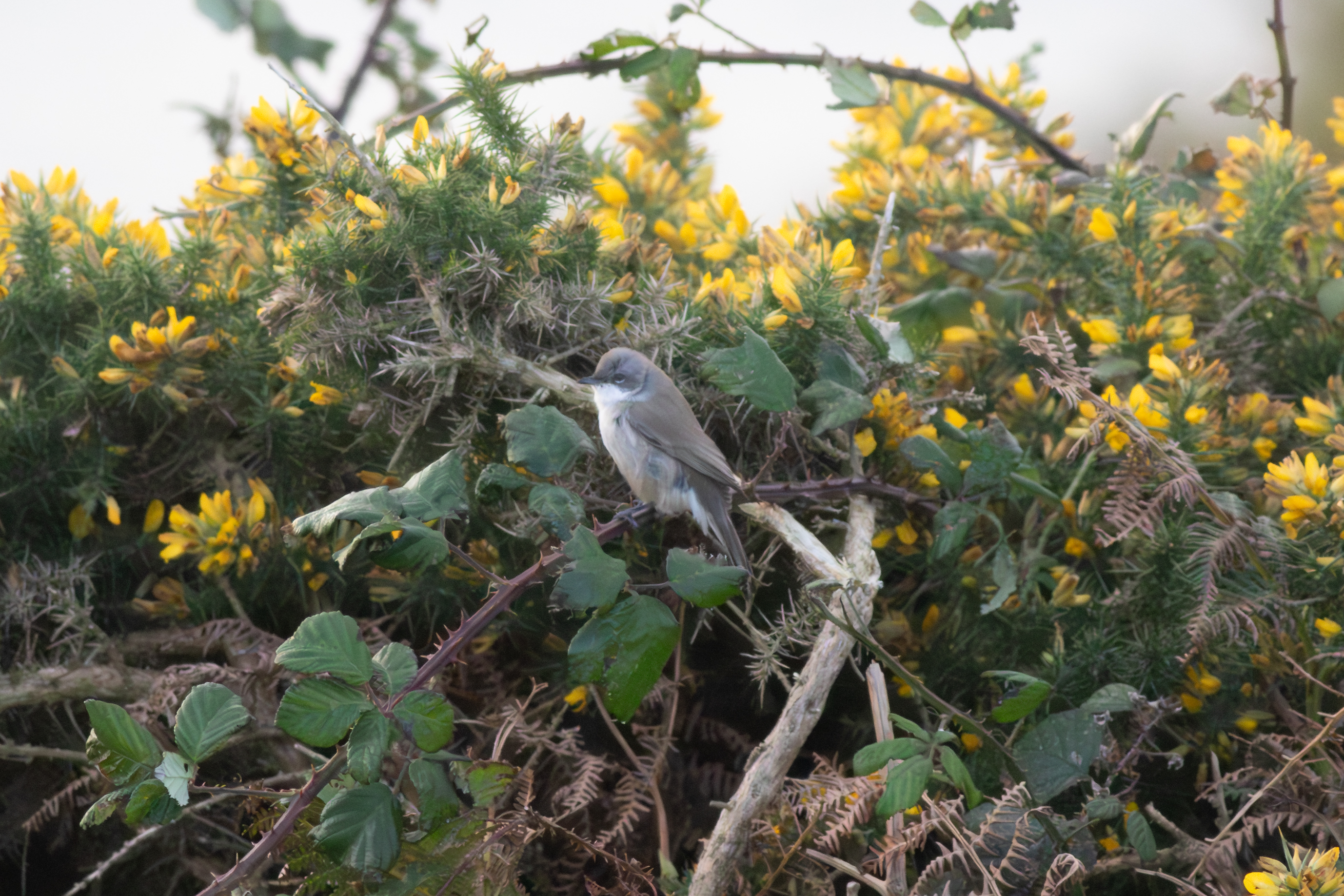 Lesser Whitethroat, Quarter Wall © Joe Parker
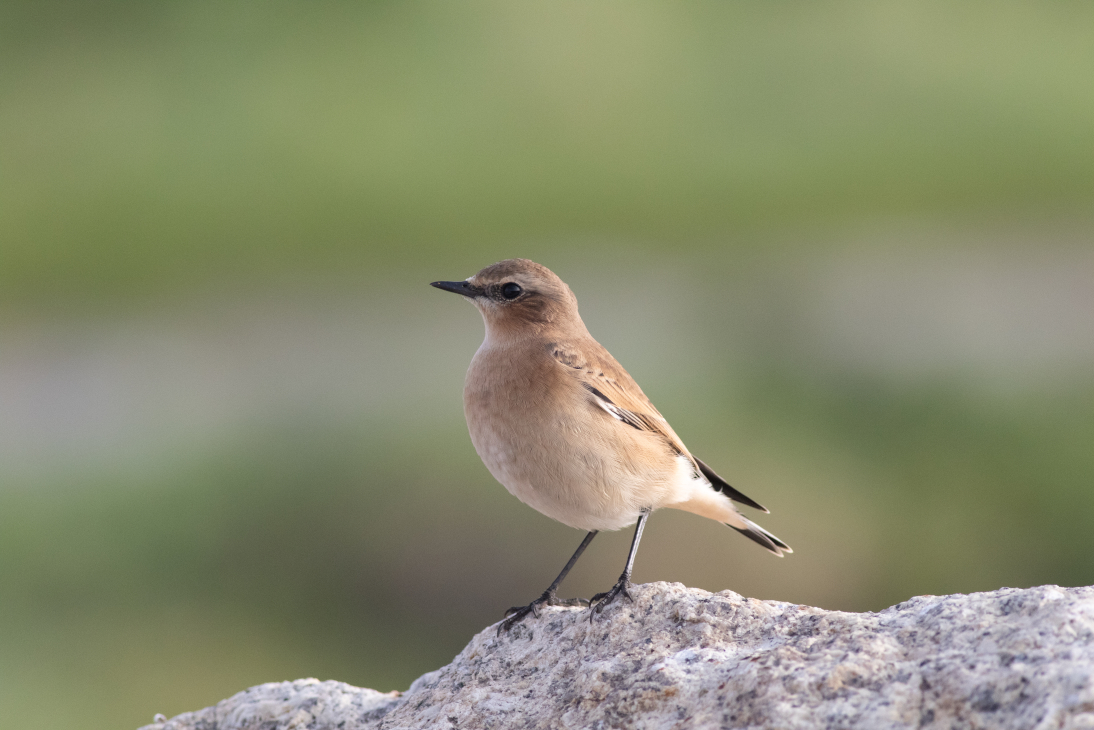 Wheatear, Stonecrusher © Joe Parker
24th to 27th September 2023
Strong winds have prohibited any ringing this week. Despite the large westerly weather systems of late, Luke managed to uncover a Yellow-breasted Bunting between the pigsty and airfield associating with Meadow Pipits. This is a bird from the far east, Siberia, and is the third record for Lundy after two in the 1980s. The large gap in records followed the species' catastrophic collapse in range and population when massive over-harvesting reduced the amount of suitable habitat in their Chinese staging/wintering grounds. As a particularly exciting record, a small twitch assembled on the 26th, but unfortunately it hasn't reappeared for anyone other than Luke, the original finder.
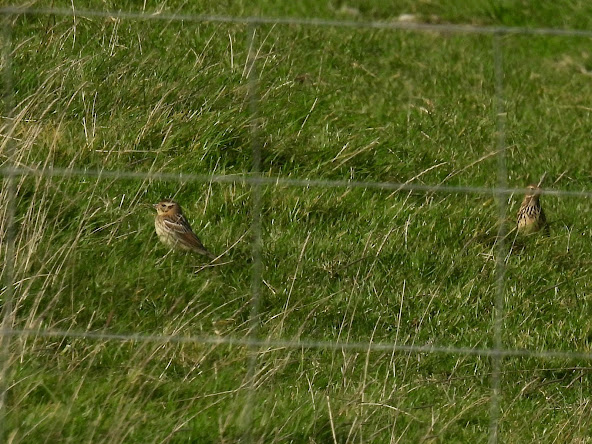 Mega record of a first winter Yellow-breasted Bunting with a Meadow Pipit. © Luke Marriner
At least one Red-eyed Vireo has remained in Millcombe, along with one ringed Wryneck, both seen on the 26th. The Rose-coloured Starling appears to have left us now, with no sightings in the week since the 20th.
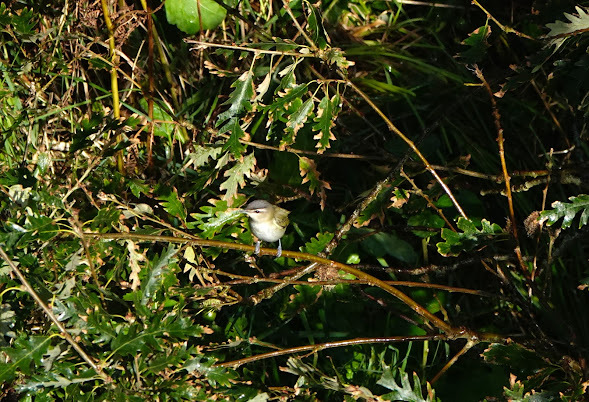 Ringed Red-eyed Vireo in Smelly Gully. © Angus Croudace
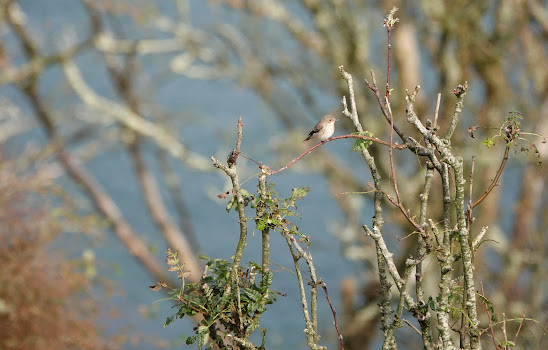 Spotted Flycatcher, Millcombe © Angus Croudace
18th to 23rd September 2023
Strong winds have been a feature of the past week. We watched the weather charts at the start of the week with interest as a fast moving warm front zipped across the Atlantic. Off the back of this system (the remnants of a hurricane) the west coast of UK and Ireland have received a record breaking influx of American vagrants in the past few days, which have all been carried off course by the strong winds. Lundy has shared a small part of the fall with two individual Red-eyed Vireo landing in Millcombe Valley on 20th. One was ringed, and then retrapped three days later having put on one gram of weight. These are the 11th and 12th records for Lundy, the one that entered the nets was the 7th to be ringed, and they are the earliest records by 8 days.
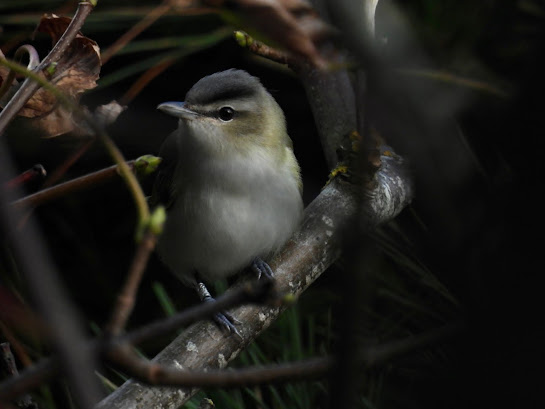 Red-eyed Vireo in Millcombe © Luke Marriner
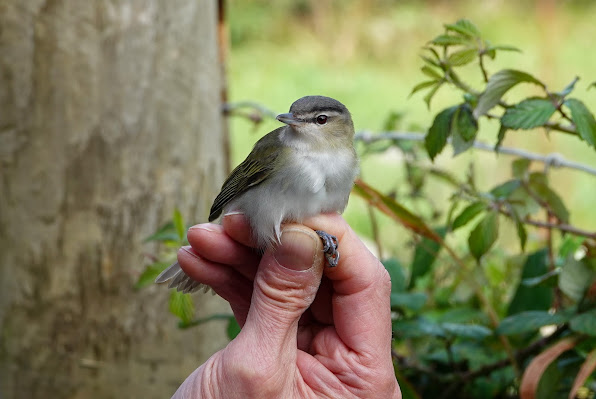 Red-eyed Vireo in the hand at Brambles Villa © Angus Croudace
Up to four Wryneck continued their stay until the 21st, but haven't been picked up since. The last day the Rose-coloured Starling was seen was the 20th, but there's a good chance it is still here - the focus has been on ringing in Millcombe and covering the rest of the island away from the village on the hunt for vagrants! Other miscellaneous records of note this week include a Sandwich Tern heard calling from Millcombe on the 23rd, a first-year Osprey headed south over Rat Island on the 18th. The first-year Barred Warbler which was ringed on the 17th was still present on the 18th around the Lower Garden. A very smart Wood Warbler was caught in Millcombe on the 21st. A Little Bunting was seen feeding with a small flock of Linnet on the track near the Lambing Shed on 23rd.
 Wood Warbler ringed at Millcombe © Brittany Maxted
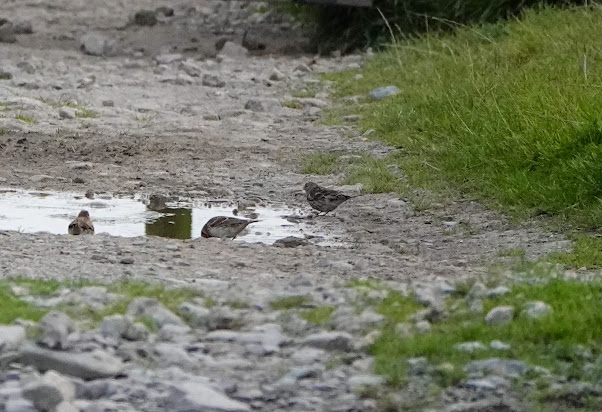 A record shot of Little Bunting (centre) with Linnet © Angus Croudace
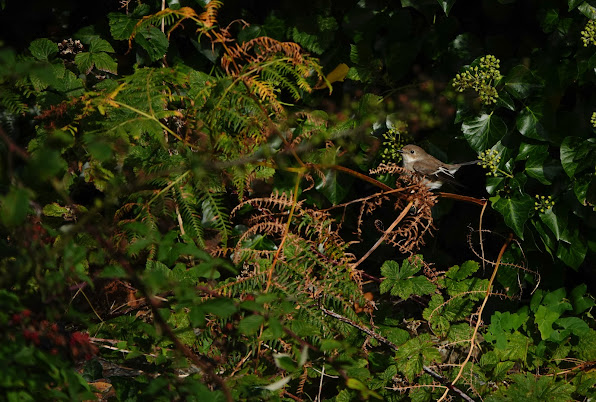 Skulking Pied Flycatcher which has outstayed all others by over a week. © Angus Croudace
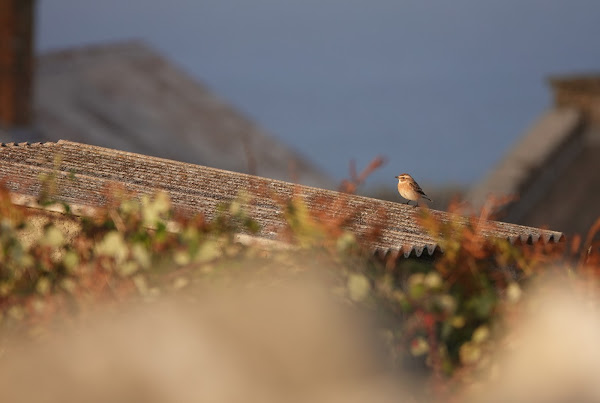 Whinchat still above Millcombe most days (here at the allotments) © Angus Croudace
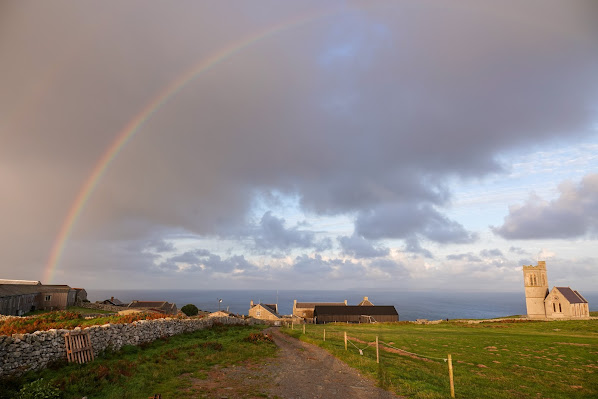 There were a lot of rainbows between squalls this week. © Angus Croudace
13th to 17th September 2023
A period of northerly winds overnight saw a fairly substantial fall of Blackcaps on the 13th with over 60 ringed and 76 recorded. However, clear skies and low winds quickly beckoned them onwards and a mass exodus left us with very few birds at the end of the week. Strong easterlies over the weekend brought a few new birds in, but most sensibly hunkered down. In the only short lull on Sunday evening feeding activity resumed, and a stunning first-year Barred Warbler dropped into the slope net in Millcombe.
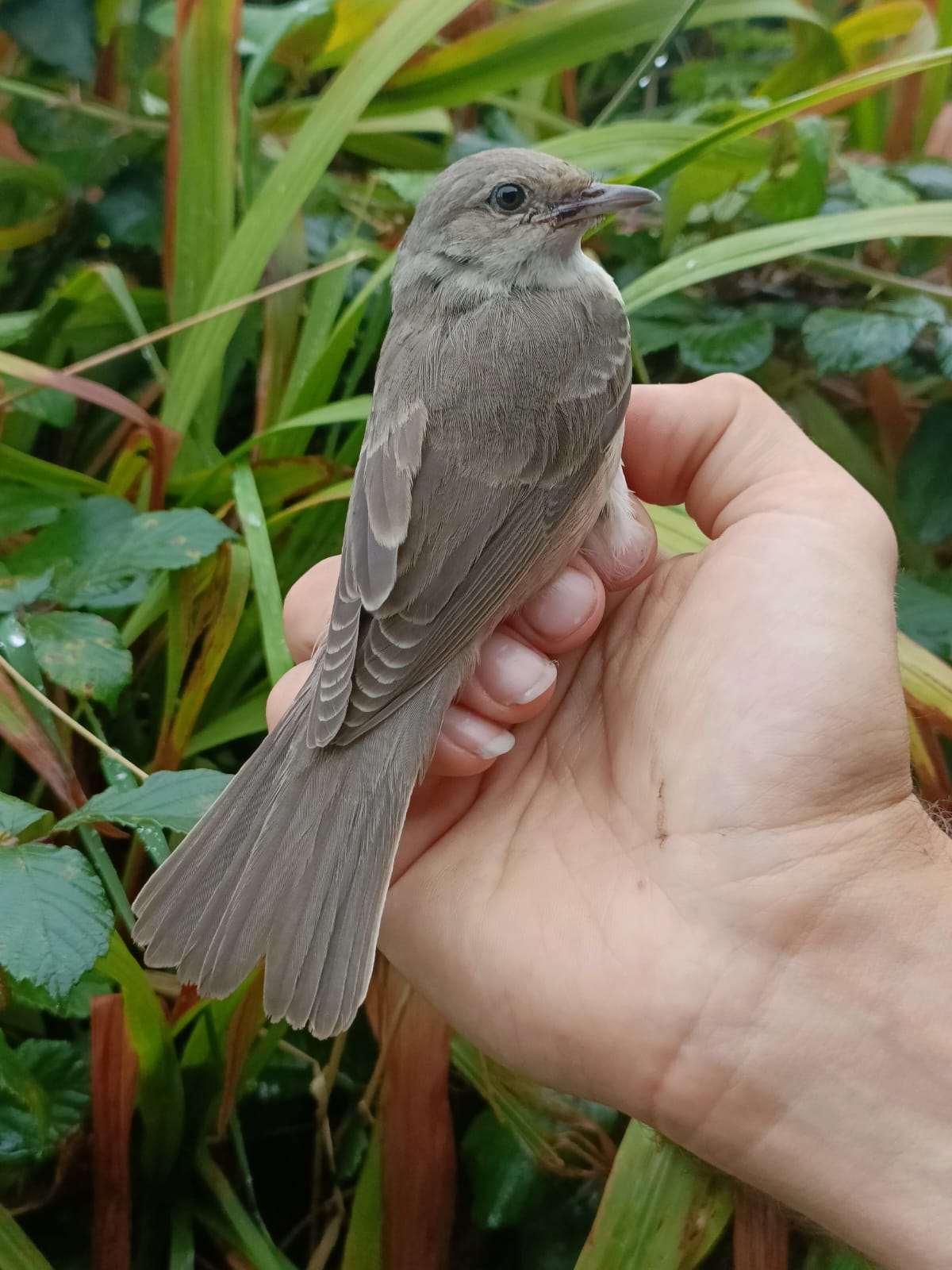 First-year Barred Warbler ringed in Millcombe on 17th © Anna Sutcliffe
A pair of Teal were present on Pondsbury on the 13th, although just the male has been picked up subsequently at Quarter Wall pond. A Water Rail was heard calling in Smelly Gully on the 13th and 15th. One Cormorant was seen on the 13th. The first-year Grey Heron has still been present each day, with a raiding party of six further first-years riding the thermals along the east coast on the 15th.
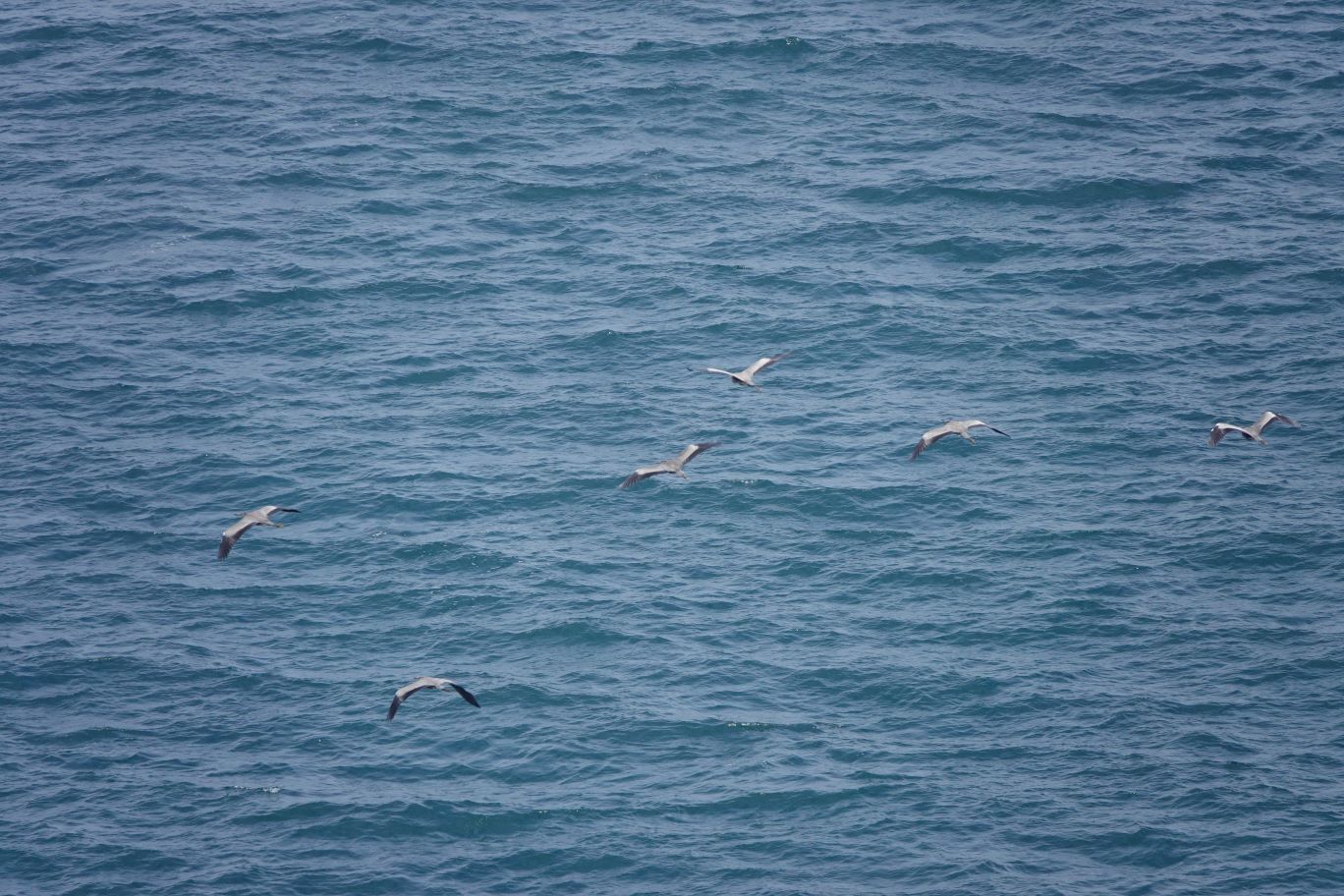 Six first-year Grey Heron along the east coast on the 15th © Angus Croudace
In terms of waders, a single Ringed Plover was heard on the 13th. Three Snipe on the 13th including two by Rocket Pole and one at Pondsbury on 15th. A Snipe was also ringed in the night of the 17th. Greenshank single picked up calling as it flew over Millcombe by Tony Taylor on 14th. A Dunlin was feeding on Barton's Pond on the 15th. Two Golden Plover over the Airfield on the 14th and a single calling on 16th and 17th. On the 15th also Joe successfully dazzled and rung a first-year Dotterel at the north end, just the seventh bird ringed on Lundy!
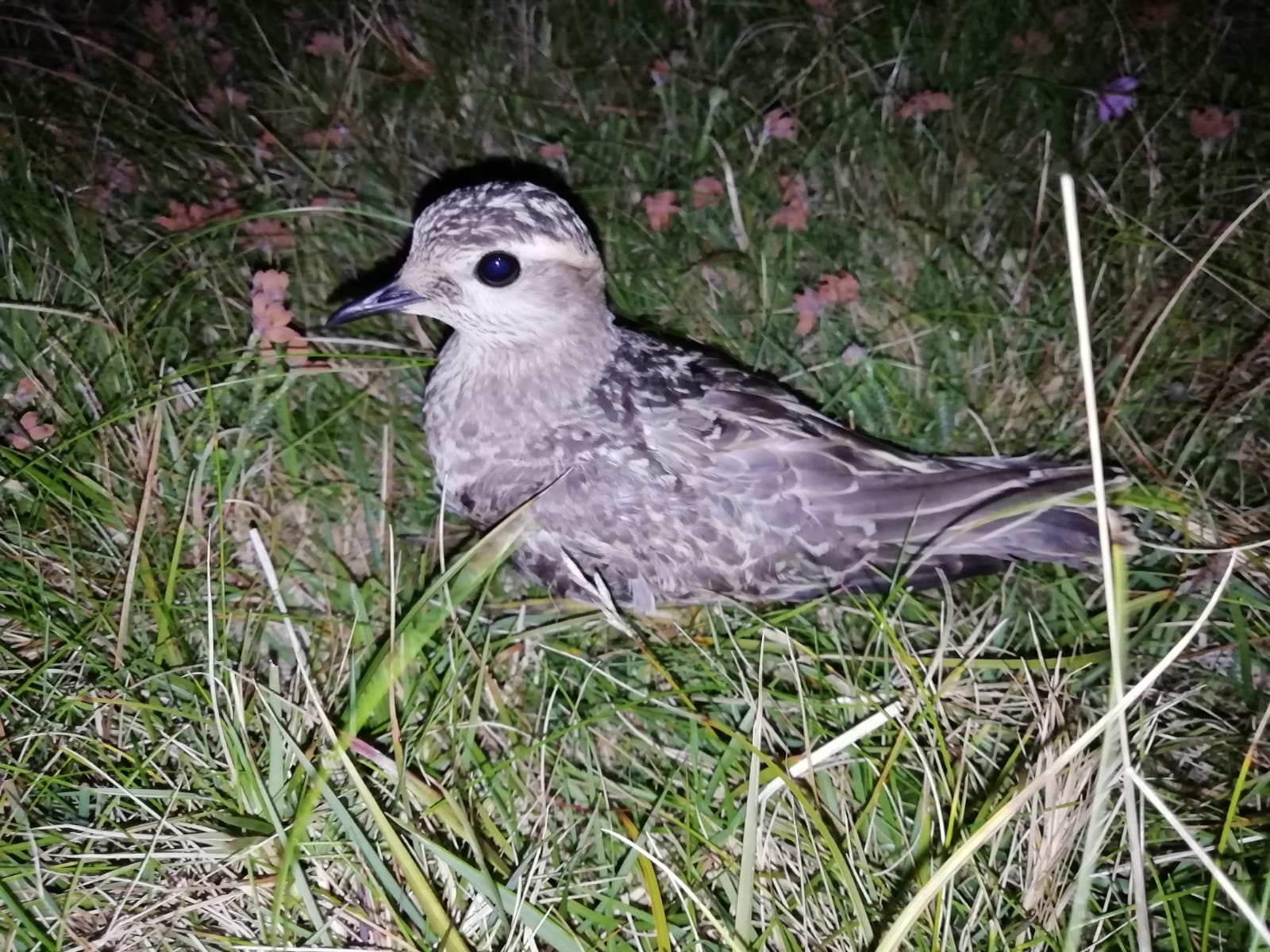 First-year Dotterel ringed at the north end of the island on 15th September © Joe Parker
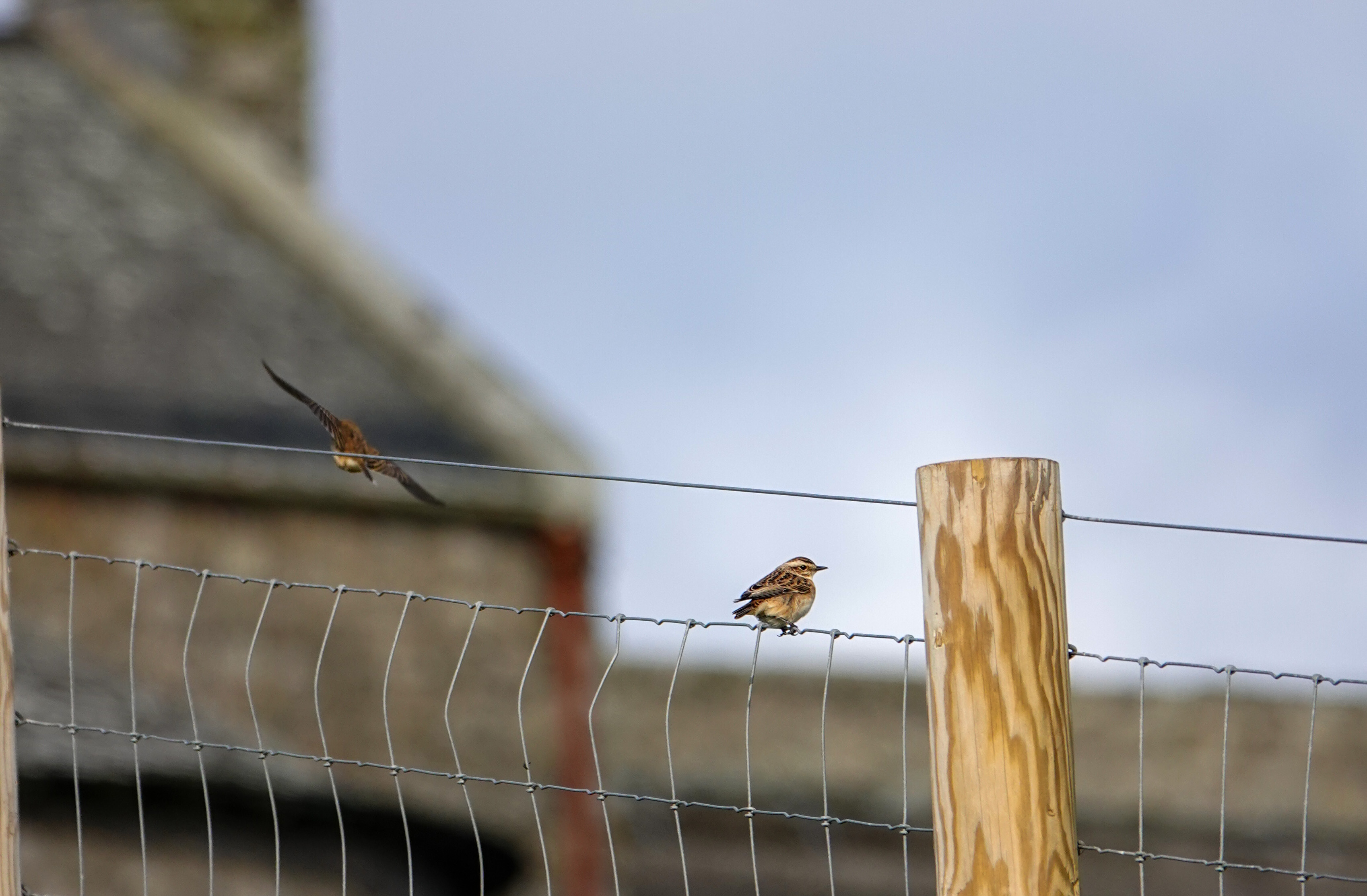 Whinchat and Meadow Pipit at Barton's. © Angus Croudace
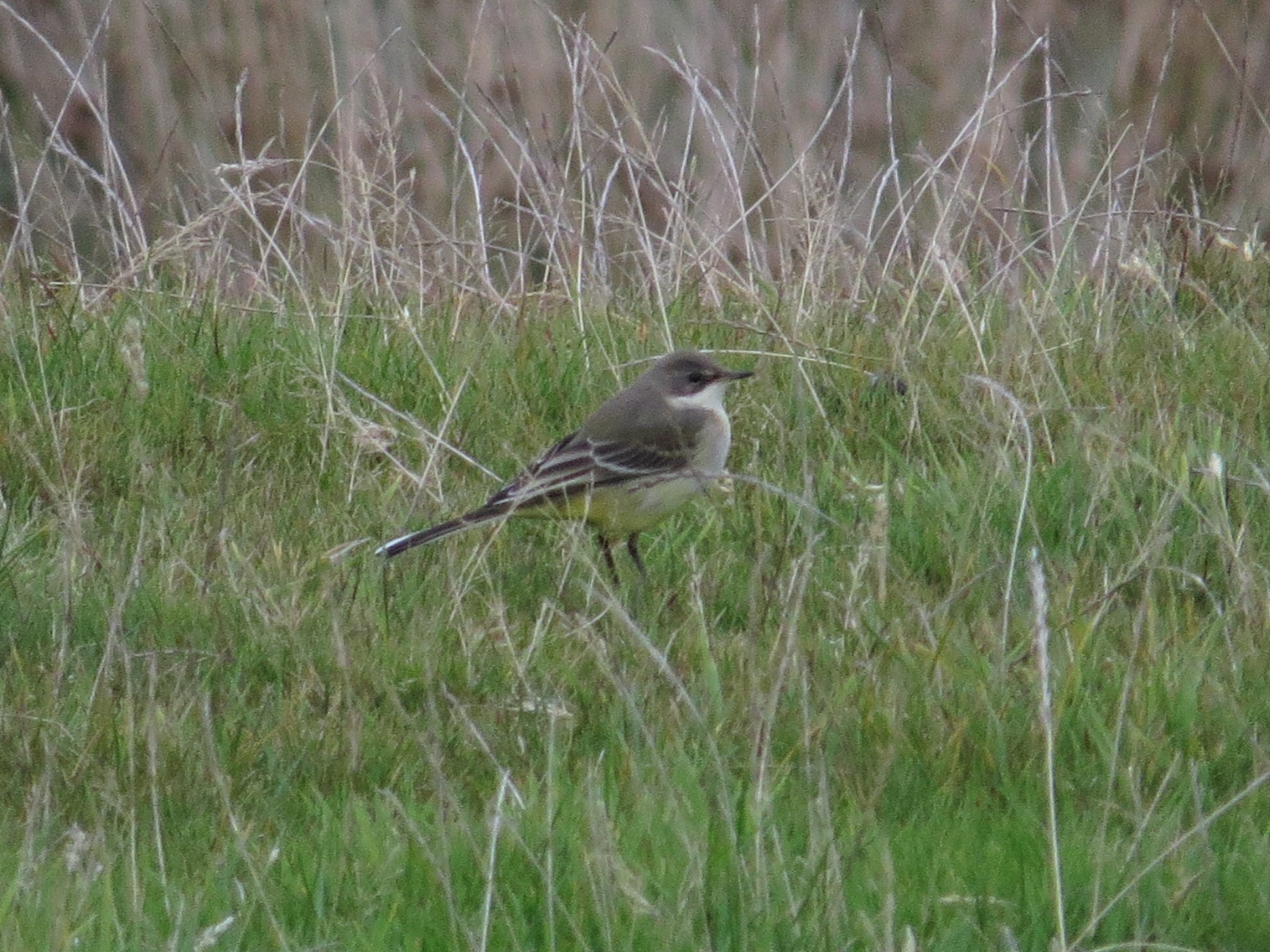 Grey-headed Wagtail m.f.thunbergi in St Helen's Field on 15th. © Shaun Robson